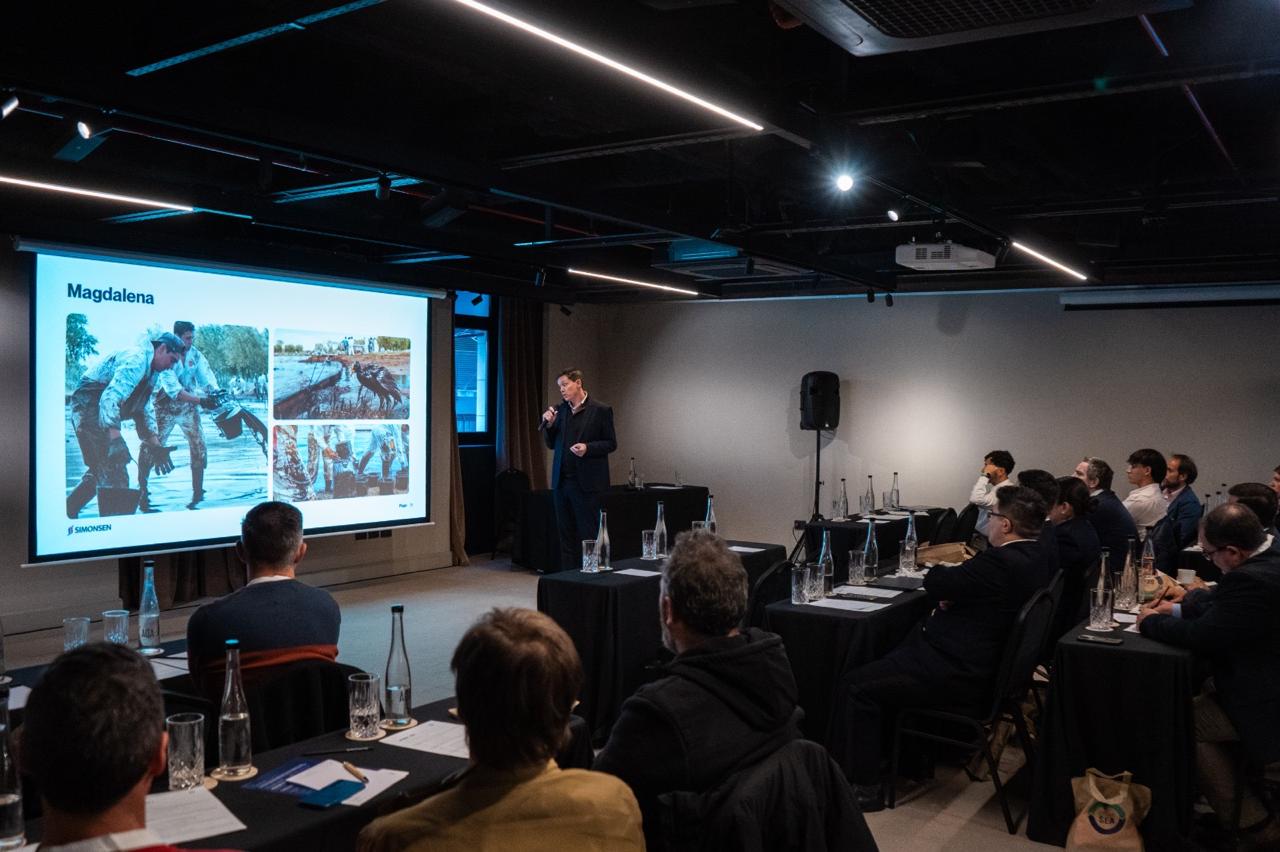
A few weeks ago, our team was honored to be invited as guest speakers at the Maritime-Fluvial Spill Preparedness and Response Workshop. The workshop provided an opportunity to exchange insights with specialists from the Argentine Naval Prefecture (PNA), ITOPF, T&T Salvage, and OceanPact. The sessions provided a comprehensive overview of the industry’s current landscape, tackling crucial issues ranging from Tier III capabilities and risk assessment to wildlife response and new technologies.
During the event, we took the stage to present our analysis on the evolution of maritime law and its direct impact on environmental crisis management. To illustrate our points, we focused on two major local incidents: the 1999 Estrella Pampeana spill in Magdalena and the 2014 Octbreeze Island collision in San Pedro.
Our presentation highlighted a fundamental truth: the difference between an ecological catastrophe and a controlled crisis depends on having a robust regulatory and operational framework. The 1999 incident clearly demonstrated that the lack of a proper regulatory framework leaves us vulnerable, exposing the urgent need to openly discuss and implement these legal structures. Conversely, the 2014 incident demonstrated that when a clear framework exists, a highly coordinated response prioritizing ecological criteria ensures a swift recovery without giving rise to significant legal disputes.
One of the key takeaways was the importance of keeping Argentina’s maritime legal framework up to date. Ratifying modern international conventions—such as the 2001 Bunkers Convention and the 1989 Salvage Convention—is essential to strengthen preparedness and response to maritime pollution incidents. We also emphasized the importance of continuing the discussion around additional international instruments, including the 2010 HNS Convention, as part of the ongoing modernization of Argentina’s maritime regulatory framework.
We always appreciate the opportunity to participate in events like this. Engaging with colleagues, exchanging best practices, and strengthening professional relationships are essential to advancing our industry. These discussions help us build a safer and more resilient maritime environment.